
Latest Research Papers
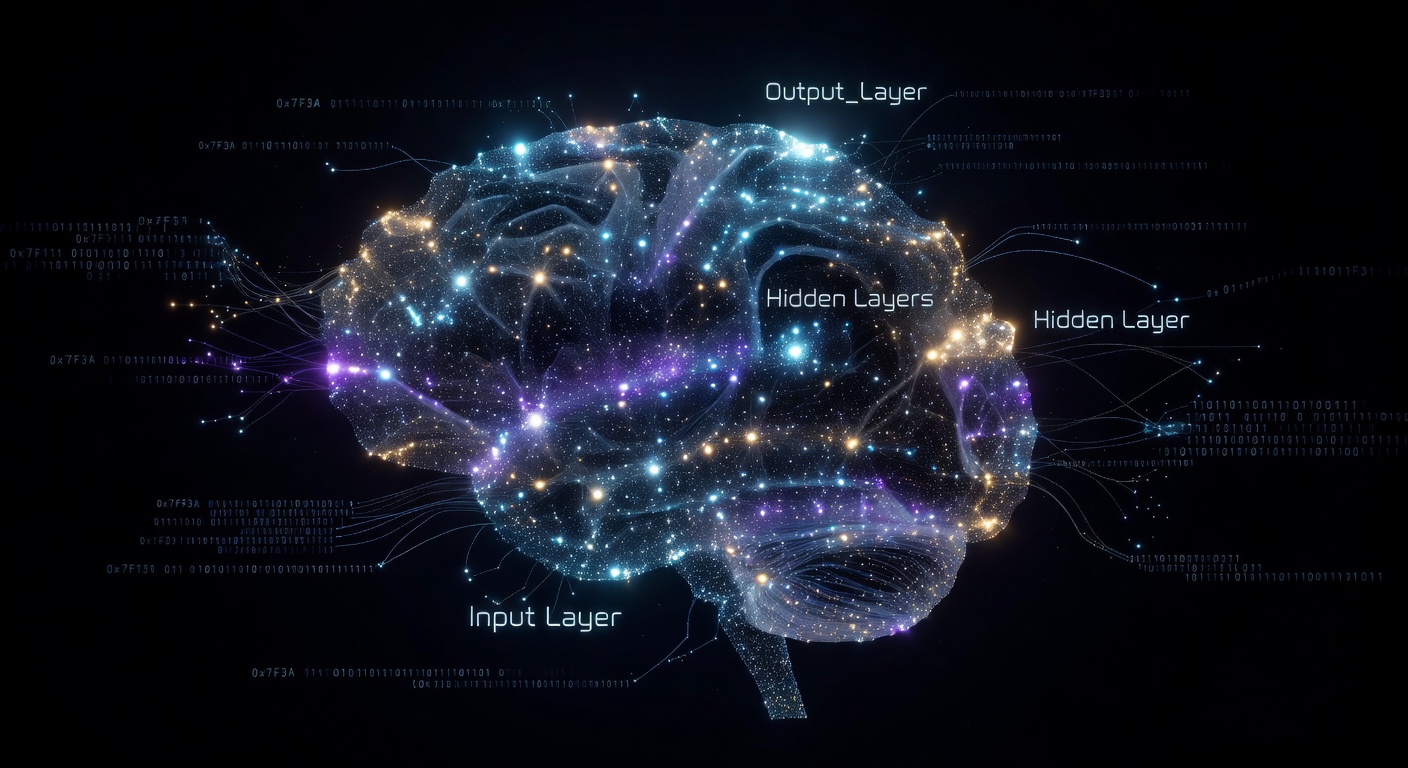
Sparse Attention Architectures Outperform Dense Transformers at Scale
A landmark study from the Tokyo AI Institute demonstrates that sparsely connected attention mechanisms achieve 40% lower compute cost with equivalent perplexity benchmarks across 14 language tasks.

Continual Learning Without Catastrophic Forgetting: A New Paradigm
Researchers at MIT CSAIL introduce EWC-V2, an elastic weight consolidation method enabling neural networks to learn sequentially across 200+ tasks with less than 0.3% performance degradation.
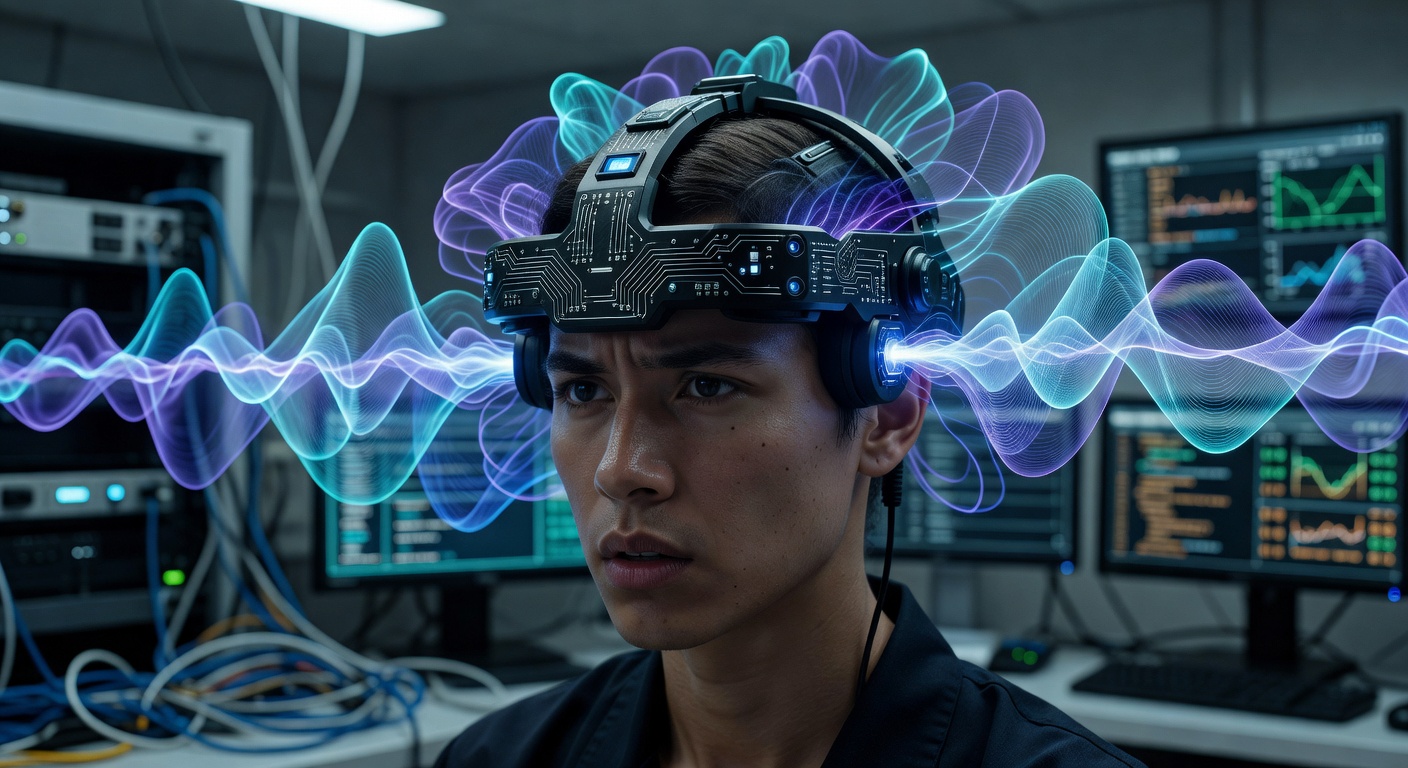
Non-Invasive Neural Decoding at 1,024-Channel Resolution Achieved
A breakthrough collaboration between Neuralink Labs and the University of Kyoto yields real-time speech decoding from EEG signals, with an accuracy rate of 94.1% across 50 participants.

Research Spotlight
Quantum AI at the Edge of UnderstandingQuantum Computing Breakthroughs That Redefine What AI Can Learn
The convergence of quantum mechanics and machine learning is no longer theoretical. In the past six months, three independent research teams have published results demonstrating quantum advantage in real-world optimization tasks — outperforming classical supercomputers by factors of 10,000 or more.
IBM's 4,096-qubit Eagle processor, combined with variational quantum eigensolvers tuned by gradient-free reinforcement learning, has solved molecular simulation problems that would take classical systems 47 years in under 11 minutes. The implications for drug discovery, materials science, and climate modeling are staggering.
Speedup vs classical systems
Qubit count (IBM Eagle)
- Variational quantum circuits learning drug interactions
- Error-corrected logical qubits stable for 8.3 hours
- Hybrid classical-quantum training pipelines
- First quantum advantage on NLP classification tasks
Research Categories
Quantum Supremacy in Optimization Landscapes
How variational quantum eigensolvers are conquering NP-hard problems that classical methods cannot efficiently solve.
Mixture-of-Experts Models: The Architecture Powering GPT-6
An inside look at the sparse MoE design that allows trillion-parameter models to run efficiently on consumer hardware.
Cross-Lingual Transfer in Low-Resource Languages
New multilingual pre-training strategies unlock near-native fluency in 400+ languages using only 100 training examples each.
3D Scene Understanding Without Ground Truth Labels
Self-supervised vision transformers achieve state-of-the-art on 3D object detection using only raw sensor streams as training signal.
Error Correction Thresholds Crossed for Logical Qubits
Google Quantum AI reports fault-tolerant logical qubits maintaining coherence for 8.3 hours — a new world record by a factor of 12.
Recurrent Architectures Make Their Comeback in Long-Context Tasks
State-space models like Mamba-3 challenge transformer dominance on sequences exceeding 1 million tokens with linear compute scaling.