Machine Learning

The Science of Learning Machines

May 6, 2026 · Special Edition · 14 min read

Algorithms Explained

From transformer architectures to generative models — the concepts shaping the future of AI.

Transformers
Architecture

Transformers & Attention

The attention mechanism revolutionised sequence modelling. Modern transformers process entire contexts in parallel, enabling unprecedented scale and capability across language, vision, and beyond.

Read more
Reinforcement Learning
RL

Reinforcement Learning

From AlphaGo to robotic manipulation, RL agents learn by interacting with environments. RLHF has become the cornerstone of aligning large language models with human preferences.

Read more
GANs
Generative

Generative Adversarial Networks

GANs pit a generator against a discriminator in an adversarial game. Despite being superseded in many domains, they remain influential in high-fidelity image synthesis and domain adaptation.

Read more
Diffusion Models
Generative

Diffusion Models

By learning to reverse a noise process, diffusion models have become the dominant paradigm for image, audio, and video generation — powering tools that have fundamentally changed creative work.

Read more

ML Benchmarks 2026

How the leading models stack up across standardised evaluations this year.

Model MMLU Score Parameters HumanEval MATH Status
Helios-Ultra DeepLogic Research
95.1
1.8T 91.4% 89.7% Top
Nexus-7 Pro Anthropic Labs
93.4
540B 89.2% 87.3% New
Orion-128K OpenMind AI
90.2
405B 86.5% 84.1% Open
Quasar-Vision Google DeepMind
88.7
700B 84.0% 82.6% New
MistralX-22B Mistral AI
82.3
22B 79.8% 74.2% Open
SakuraLM-72B Sakura Intelligence
79.6
72B 76.1% 71.0% Open

Research Highlights

Breakthroughs from the world's leading ML research labs.

01

Sparse Mixture-of-Experts Scaling Beyond 10T Parameters

Researchers at Google DeepMind demonstrate that sparse MoE architectures can scale to ten trillion parameters while maintaining inference efficiency, unlocking new capability frontiers previously thought computationally prohibitive.

NeurIPS 2025 · Best Paper Read →
02

Constitutional AI 2.0: Self-Improving Alignment without Human Labels

A new paradigm for AI alignment allows models to iteratively critique and revise their own outputs using a learned constitutional framework, dramatically reducing reliance on expensive human feedback pipelines.

ICML 2026 · Spotlight Read →
03

World Models with Persistent Memory Enable Long-Horizon Planning

By augmenting neural world models with structured external memory, autonomous agents can now plan effectively over horizons exceeding one million environment steps — a 100x improvement over prior approaches.

ICLR 2026 · Outstanding Paper Read →
AI Bias Mitigation

Building Fairer, More Robust Models

The gap between benchmark performance and real-world deployment remains one of ML's most pressing challenges. Distribution shift, dataset biases, and adversarial vulnerability continue to undermine model reliability at scale.

Leading organisations are now investing heavily in bias auditing pipelines, red-teaming protocols, and interpretability tooling — recognising that a model that cannot be understood cannot be trusted.

Our in-depth series examines the engineering and ethics behind building ML systems that perform equitably across diverse populations and edge cases.

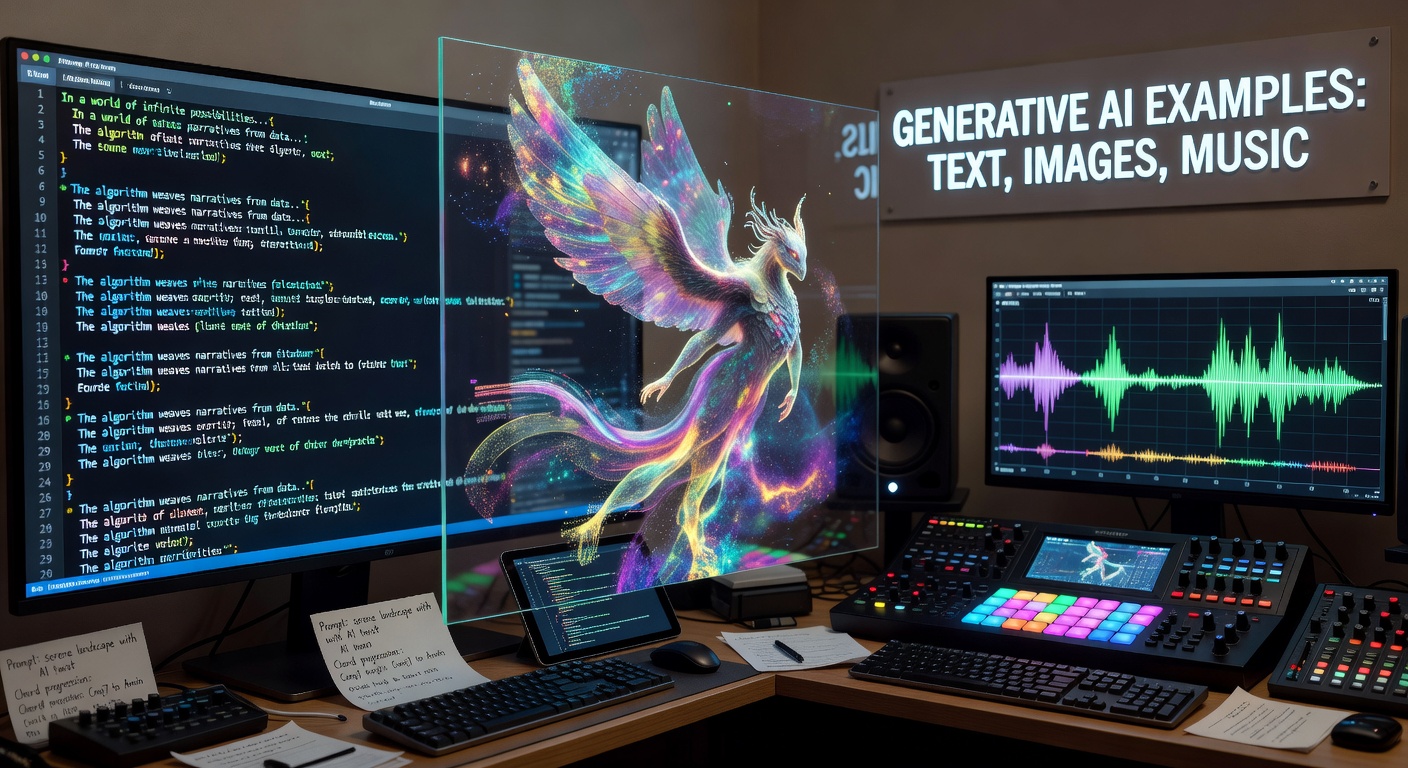
Explore the Series Watch Talks

The ML Briefing

Every Tuesday — the most important machine learning developments, curated for practitioners and researchers.