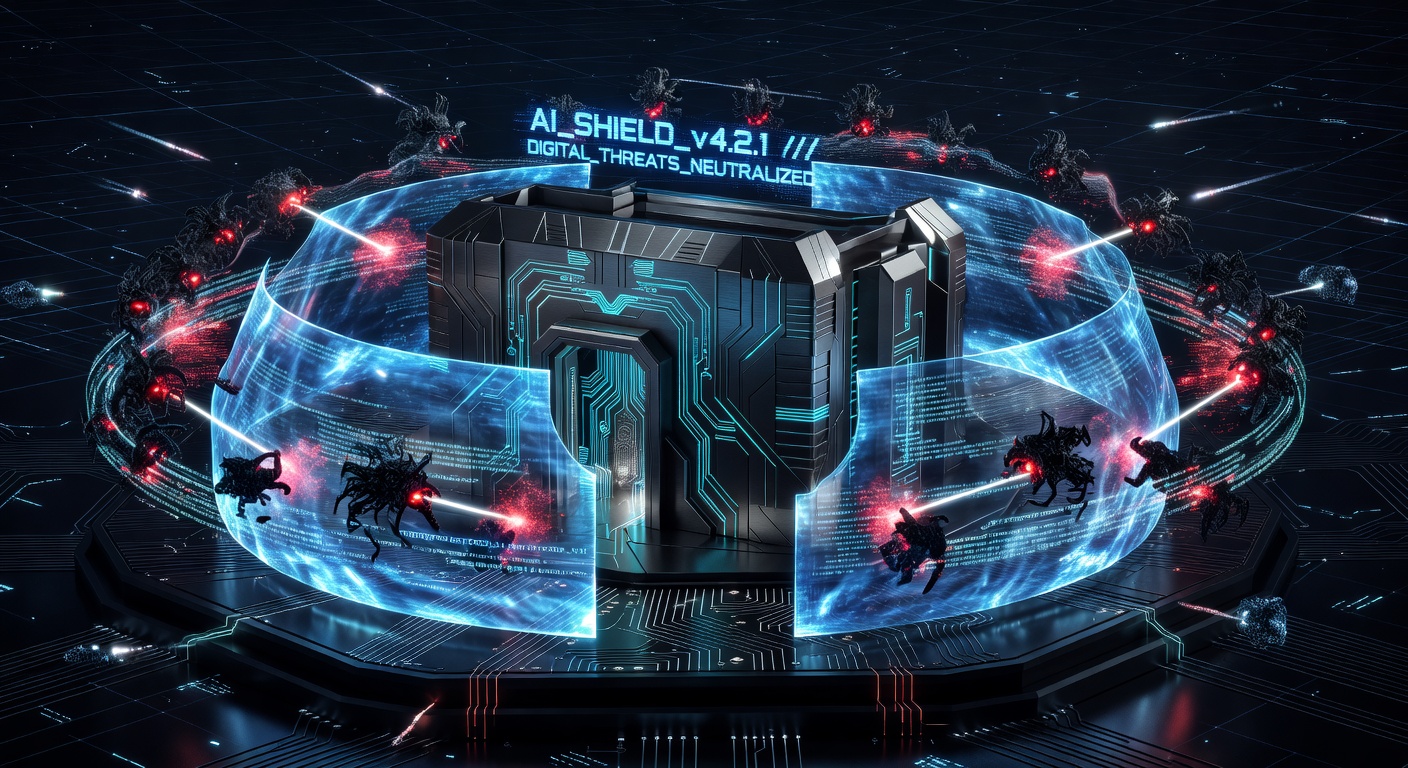
We are living through a fundamental shift in how digital conflict unfolds. Artificial intelligence has become both the most powerful weapon in the attacker's arsenal and the most sophisticated shield defenders have ever wielded. The pace at which threats mutate, propagate, and adapt has left traditional perimeter-based security models dangerously exposed. Nation-state actors, organized criminal networks, and lone opportunists alike now leverage AI to probe, deceive, and infiltrate at a scale and speed no human team can match — demanding an equally intelligent response.
340%
Increase in AI-driven cyberattacks over the past 24 months, according to the Global Threat Intelligence Consortium
$10.5T
Projected annual cybercrime damages by 2025 — surpassing the GDP of every nation except the United States and China
68%
Of enterprise organizations now deploying AI-powered tools as a primary layer of their cybersecurity defense strategy
Featured Investigation
How Machine Intelligence Is Rewriting the Rules of Digital Defense
For decades, cybersecurity operated on a fundamentally reactive paradigm. Analysts would identify a threat, classify it, and encode a signature to block future instances. It was a game of perpetual catch-up, and attackers — with the luxury of choosing their timing and vector — held the structural advantage. The emergence of AI-driven defense platforms is beginning to invert that dynamic in ways that were unimaginable just five years ago.
Modern threat detection systems powered by deep learning can now analyze billions of network events per day, correlating signals across endpoints, cloud environments, and identity systems simultaneously. Where a human analyst might spend hours triaging a single alert, an AI system can contextualize a potential intrusion across thousands of related data points in milliseconds — flagging not just known attack patterns but subtle behavioral anomalies that no rule-based system would ever catch.
Consider the evolution of phishing. Once a relatively crude discipline, it has been dramatically refined by large language models capable of generating highly personalized, grammatically flawless lure emails at industrial scale. The same AI techniques that power consumer chatbots can produce spear-phishing content indistinguishable from legitimate correspondence — even mimicking the tone, vocabulary, and formatting preferences of a specific executive based on publicly available communications.
The defensive response has been equally sophisticated. AI-native email security platforms now analyze not just content and metadata but writing style, send-time patterns, and relational graphs between sender and recipient to assign probabilistic risk scores in real time. Some organizations report a 94% reduction in successful phishing incidents within six months of deploying such systems — a figure that would have seemed implausible under any prior approach.
Yet the same tools that defend can also deceive. Adversarial AI — the practice of deliberately manipulating machine learning systems through carefully crafted inputs — represents one of the most troubling frontiers in cybersecurity today. Researchers have demonstrated that image-recognition models used for identity verification can be fooled by imperceptible pixel-level perturbations. Malware has been written to "poison" the training data of AI classifiers, causing them to systematically misidentify threats. As AI becomes the backbone of enterprise security, the integrity of the AI itself becomes a critical attack surface.
The organizations navigating this landscape most successfully share a common philosophy: they treat AI not as a replacement for human judgment but as a force multiplier that expands what their teams can perceive, analyze, and respond to. The future of cybersecurity is not man versus machine — it is a collaborative intelligence, where artificial systems handle the velocity and volume of modern threats while human experts focus on strategy, context, and accountability.
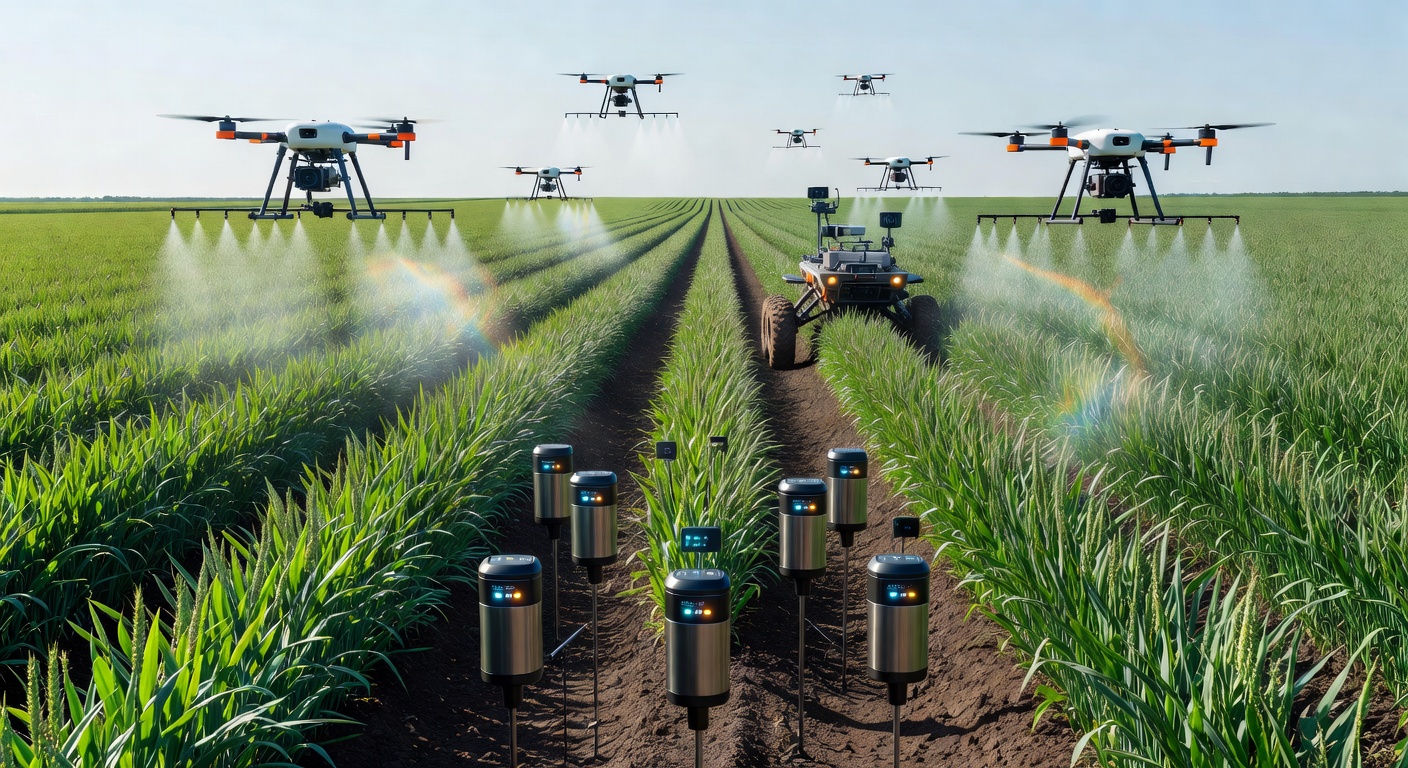
AI-enabled aerial monitoring systems scan network infrastructure perimeters with precision previously requiring entire security operations teams — a microcosm of how machine intelligence is transforming digital defense at every scale.
Topic Areas
Key Topics in AI Security
AI Threat Detection
How deep learning models trained on petabytes of network telemetry identify intrusion patterns too subtle for any rule-based system to catch — in real time, at global scale.
Zero-Trust Architecture
The "never trust, always verify" framework is being supercharged by AI-driven continuous authentication, adaptive access controls, and micro-segmentation at machine speed.
Adversarial AI
Exploring how threat actors manipulate machine learning models through poisoning, evasion, and model extraction attacks — and the emerging science of robust AI that resists them.
Deepfake Defense
As synthetic media becomes indistinguishable from authentic content, a new generation of AI forensics tools is learning to identify the invisible artifacts that betray artificially generated faces, voices, and video.
Latest Stories
From Our Cybersecurity Desk
Threat Intelligence
The Rise of AI-Authored Malware: When Code Writes Itself to Evade Detection
Security researchers have documented a new class of polymorphic malware that uses generative AI to rewrite its own code on each execution cycle — rendering traditional signature databases obsolete overnight.
Inside the Zero-Trust Revolution: How Fortune 500s Are Rebuilding Security From First Principles
A quiet transformation is underway in enterprise security architecture. We speak with CISOs at five major corporations about the painful, necessary journey away from implicit trust — and what AI makes possible.
Voice Cloning at Scale: The New Frontier of Social Engineering Attacks Targeting C-Suites
With just 30 seconds of audio, AI can now clone a voice with uncanny accuracy. Fraudsters are using this capability in a new wave of vishing attacks that have already netted hundreds of millions in unauthorized transfers.
The adversary doesn't sleep, doesn't take holidays, and doesn't get fatigued. AI-driven defense isn't an option anymore — it's the only way to operate at the same tempo as the threats we face.
Dr. Yuki NakamuraChief Security Officer, Synapse Global Technologies
What worries me most isn't the AI cyberattacks we can imagine today — it's the attack surface we're creating by deploying AI systems that haven't been stress-tested against adversarial manipulation.
Priya MehrotraDirector of AI Safety Research, CertiPath Institute
The organizations that will survive the next decade of cyber conflict are those building a culture where AI and human analysts are genuine collaborators — each compensating for the other's blind spots.
Marcus ÖbergFormer NSA Technical Director, Founding Partner at Sentinel Ventures
Stay Informed
The Intelligence Briefing
Join 48,000+ security professionals and AI researchers who receive our weekly digest of the most important developments at the intersection of artificial intelligence and cybersecurity.
No spam. Unsubscribe anytime. We respect your privacy.